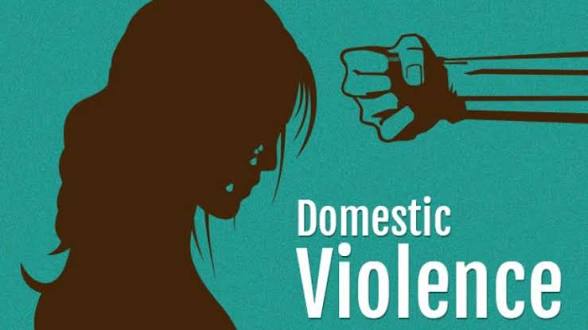
Domestic violence has only recently been declared criminal offence. Domestic Violence is a drain on many aspects of social system, and it has a subtle but significant impact on country’s growth. In terms of law enforcement, healthcare, lost work, and general development, domestic violence damages nation a lot. Domestic abuse is a worldwide problem that cuts beyond national borders, as well as socioeconomic, cultural, ethnic and class divides. This issue is not only global, but occurs frequently, making it common and recognised practice. It’s morally indefensible to keep it going. Individuals, health-care system, and society all pay a high price for it. The domestic violence was not defined as a crime until 1970s, at the end of 2oth century, justifying intervention by the criminal justice system. This article examines the history of domestic violence as a criminal offence.
INTRODUCTION
Criminalisation of domestic violence in India was brought about in early 1980s after a sustained campaign by feminist groups and women activists all over country. Great impetus was imparted to this movement, especially after the much criticised judgement of supreme court in MATHURA RAPE CASE. The demand for criminalisation for dowery death and domestic violence was criminalisation of all the struggles ending successfully in the enactment of 498AIPC 1983, SEC 304B IN 1986 and correspond provision in Indian Evidence Act 1822. These criminal law reforms held great promise at the time of their enactment. The criminalisation of domestic violence in form of SEC498A and 304B sought to correct historical legal protections afford to abuse women. But despite the legal reforms, society responses to domestic violence still largely exclude legal interventions. Advocates for women face violence within homes claim that male batterers are rarely arrested, prosecuted or sentenced as severely as other violent offenders and studies done by several organisation and NGOs shows these claims are accurate. Criminal law has an important role in changing his position. Indian law has developed a combination of criminal provision and protective remedies. The PROTECTION OF WOMEN FROM DOMESTIC VIOLENCE ACT [PWDVA]2005 is particularly significant because it recognizes and provides remedies designed to protect women. The introduction of BHARATIYA NYAYA SANHITA 2O23, Which replaces INDIAN PENAL CODE 1860.The effectiveness of this framework ultimately depends not only on legislation but also police actions and social awareness.
MEANING OF DOMESTIC VIOLENCE
According to the U.S. Department of Justice Office on Violence Against Women, domestic violence is a pattern of abusive behaviour in any relationship used by one partner to gain or maintain control over another intimate partner. In criminal law, the crime of domestic violence may occur in one or more incidents. It may include an attempted assault or threats of imminent physical harm. It may take the form of sexual assault. It may encompass the psychological abuse involved in stalking DOMESTIC VIOLENCE AND ITS ROOT CAUSES Women’s violence is a denial of women’s full advancement. Bodily, sexually, or emotional abuse directed at a spouse, partner, or other family member residing in the same residence is referred to as domestic violence. When one member of a family, partner, or ex-partner attempts to physically or psychologically dominate or hurt the other, this is known as domestic violence. Domestic abuse can occur in every society, and offenders can be of any race, ethnicity, or religion. Violence against women, especially spousal abuse and sexual against women are significant public health issues and abuses of women’s human right. Domestic violence is defined as the violent persecution of women within the family, which is typically inflicted by men. Domestic violence, in the majority of cases, refers to violence against women by members of the household in which she resides. It might be the hubby, his parents, siblings, or any other resident with the overt or hidden authority to act in ways that harm women physically or mentally. It occurs behind closed doors and is frequently denied by the women who have been victims of violence. Within the meaning of the Protection of Women from Domestic Violence Act, 2005, the accuser’s conduct, inactivity, accomplishment, or attitude is considered domestic violence if it— (a) Causes violent assault,sex assault, verbal and psychological manipulation, or financial abuse to the affected person’shealth, safety, life, limb, or welfare, either mental or physical, or threatens to do so; or (b) Mistreats, damages, hurt, or puts the aggrieved person in danger in order to force her or any other family member to comply with any illegal demand for dowry, other assets, or valuable security; or (c) Any conduct listed in paragraphs (a) or (b) having the effect of intimidating the injured person or any person linked to her; or (d) Somehow injures or harms the injured person, whether physically or mentally.
CATEGORIES OF DOMESTIC VIOLENCE
Domestic violence is typically thought of as a scenario in which an abused partner bodily abuses the victim. Physical abuse is simply one sort of abuse; domestic violence can take many forms, including physical, emotional, sexual, financial, and psychological abuse. Being a victim of domestic violence can leave you feeling helpless and even doubtful of yourself, therefore it’s vital.
A. Violence in Physical Form: Physical abuse is the most obvious type of domestic violence. This involves the use of aggression against the victim, which results in severe injury (a punch or a kick, stabbing, shooting, choking, slapping, forcing you to use drugs, etc.). The injury, on the other hand, does not have to be severe. Your abuser, for example, smacks you a few times, causing small injuries that do not require hospitalization. The slapping would be deemed domestic abuse, notwithstanding the little injuries.
B. Emotional Abuse: Mental abuse is described as the continuous insult, ridicule, or condemnation of a victim’s self-worth. On the surface, emotional abuse appears to be extremely widespread in unstable relationships, making it a difficult sort of domestic violence for many people to comprehend. In most states, emotional abuse is insufficient to warrant a domestic violence case unless the abuse is so severe and pervasive that the relationship may be classified as highly oppressive. To bring a domestic violence action, evidence of emotional abuse is typically combined with other forms of abuse (physical, financial, sexual, or psychological).
C. Violence Sexual in Nature: Sexual assault is a common form of abuse. Sexual violence and rape are included, as well as intimidation such as unwelcome groping and other degrading acts. Many people are ignorant of how broad the term sexual abuse is. You may have been sexually assaulted if you’ve ever been forced to use contraceptives (the pill, a condom, an IUD, etc.) or have an abortion. This is referred to as reproductive coercion.
D. Financial abuse: Financial abuse is one of the less obvious forms of domestic violence. Financial abuse can manifest itself in a variety of ways, For example, a husband who forbids his wife from getting an education or employment outside the house. Financial abuse is very widespread, especially in households where money is pooled into joint accounts (with one partner dominating) and there is little or no family support structure to help. Financial exploitation is just another type of oppression, albeit one that is less visible than physical or sexual exploitation. For financial assistance, the victim is frequently fully reliant on their lover.The victim is fully at the mercy of the abusive relationship because there is no other way to earn money but through the abusive partner. Food, clothing, and other basics may be withheld by the abusive partner. When kids are involved, this can be construed as child abuse.
E. Psychological Abuse: Any frightening, frightening, or fear-instilling behaviour is referred to as psychological abuse. This behavioural pattern has to be consistent and significant. A single occurrence, in most situations, is insufficient to justify a domestic violence action. Psychological abuse, like emotional abuse, may not be enough to justify filing a domestic violence complaint unless it is very severe. Psychological torture can include a range of behaviours, such as: i. Injured party is banned from talking to people unless they have consent; ii. Victim is not allowed to move outside; iii. Intimidating the injured party with hostility or iv.Psychological inducement to the abusive partner for doing something that is not agreed upon with are some common examples.
REASONS RESPONSIBLE FOR THE GROWTH OF DOMESTIC VIOLENCE IN INDIA
Domestic abuse is caused by a variety of factors. There is no one-size-fits-all solution. Domestic violence against women is caused by a complex interplay of sociological, behavioural, historic, religious, and cultural causes. Domestic abuse is caused by a variety of factors. There is no one size- fits-all solution. Domestic violence against women is caused by a complex interplay of sociological, behavioural, historic, religious, and cultural causes:
A. Sociological or Behavioural Factors: Anger management issues approach, welfare dependency hardship, disparity in position, influencing character, drug dependency, parenting, and psychological fragility (bipolarize, depression, stress, etc.) are among the sociological, behavioural, and cultural aspects. Domestic violence is exacerbated by the neglect of conjugal responsibilities as a result of adulterous encounters or a lack of trust.
B. Historical Factors: The intrinsic evil of patriarchal and the supremacy attitude that has persisted among males for generations can be linked related to past events.
C. Religious Factor: Religious sanctifications indicate a subtle type of female dominance, if not outright dominance. Domestic violence against women is also increased as a result of this.
D. Cultural Factor: The urge for a male kid is one of the socio-cultural factors that leads to domestic violence. Domestic violence against women is perpetrated as a consequence of this fixation, which stems from a lack of knowledge and innate masculine dominance. This is not an exhaustive list of characteristics, and family violence motivations or catalysts may vary.
E. Dowry; Dowry is a sociological element. However, because of the high number of domestic violence instances originating from dowry demand that is illegal, it is necessary to highlight it individually. This was also accepted by Parliament, since dowry-related domestic violence has been designated as a distinct category within the Domestic Violence Act’s scope of maltreatment culminating in domestic violence.
DOMESTIC VIOLENCE AND THE LAW IN INDIA
There are different provisions in India that directly concern married women’s safety from their spouses and their husbands’ families, including:
A. Protection of Women against Domestic Violence Act, 2005:
The Domestic Violence Act of 2005 is a piece of law aimed at providing more adequate safeguards to women who are victims of domestic violence of any form, as promised by the constitution. The Act’s name implies that it does not apply only to abuse perpetrated against women by her spouse or in laws. Every woman living in a domestic relationship as a family member with a person who engages in violence is within its protective shield. As a result, women who are victims of abuse in the home or in a domestic relationship are protected by the law. Furthermore, the Act is intended to establish some civil rights, some of which are symbolic and others of which are substantial. However, the law basically tumbles under criminal jurisprudence, not only because it is imposed by magistrates under Cr.PC. 1973, but also and primarily because the repercussions of violating certain orders issued by a criminal court for providing due safeguards to aggrieved women have been built a fresh punitive offence. The popular perception following the implementation of the Domestic Violence Act appears to be that domestic violence is a crime, but the truth is that domestic violence is not a crime under the Domestic Violence Act. The male perpetrator’s acts toward women in the family have been ruled illegal, as they constitute a violation of a protective order secured by the ladies from the Magistrate. To grasp the actual implications of this, it’s crucial to know how and what kind of protection order. According to Section 18 of the Domestic Violence Act, a magistrate has the authority to issue a protection order if he or she has reasonable grounds to believe that domestic violence has occurred or is likely to occur, i.e., a woman can approach a magistrate not only when she has been subjected to violence, but also when she is anticipating such violence. This protection order is basically an injunction requiring the respondent to refrain from specified actions against the complaint. The magistrate’s authority to issue these forbidding orders goes against the legal rules that apply to injunction law, such as the rule that an injunction cannot be granted if equally effective relief may be obtained through other means. Since all of the activities that are illegal under the Domestic Violence Act have become part of the country’s criminal code, everyone is obliged to refrain from harming or injuring women’s mental or physical health, even if they do not have a prohibition order. The question arises: is a spouse who has not been served with a protective order permitted to injure his wife? If the response is clearly no, it is difficult to see how the issuing of a protection order would increase her protection against future acts of violence. As a result, it is argued that the remedy known as a protection order is a ruse. To protect the indignant women from possible domestic violence, the magistrate may impose an injunction forbidding the opponent from being in the neighbourhood of any site frequented by aggrieved persons or from running a bank account shared by parties, even if held only by the opponent. By ordering the male respondent to leave, the magistrate would effectively be evicting him from his home; similarly, by ordering the male respondent to refrain from operating a bank account held solely by him because he had shared its borrowing investments with the aggrieved woman at some point, the magistrate would effectively be depleting the opposite of his daily bread in the name of safeguarding the woman. Additionally, Section 23 of the Domestic Violence Act allows the magistrate to issue a temporary restraining order during any proceedings before him, including those under Section18.
He may award ex parte protection order based on prima facie satisfied (on the basis of affidavit), inter alia, that the application exposes the likelihood of domestic violence being perpetrated. There is no indication in the statute as to how long an ex parte order would remain in effect. In this case, the interpretation of Section 25 that a protective order issued under Section 18 remains in effect until the “aggrieved person requests for discharge” would apply equally to an interim order. The normal principle under the CPC that if an ex parte injunction is issued, the petition for the injunction must be considered within thirty days cannot apply to these procedures under the Domestic Violence Act because Section 28 makes it subservient to the CrPC. Even if remedy under Sec. 18 is sought in civil court pursuant to Sec. 26, this will be the case despite the provisions of Sec. 28. Given the foregoing legal provisions, it is not impossible that a woman might raise some hesitations about the behaviour of the male respondent with whom she has shared a household for some time and, in an attempt to bind him, file an application under Sec. 18 coupled with Sec. 23 seeks an ex parte interim injunction based on an affidavit alleging that the latter is likely to subject her to psychological abuse. When these provisions are combined with the penal clause in Section 31, the result is, which makes any infraction of an interim order a cognizable offence subject to a substantive punishment, the inconsistency of the impact becomes apparent. In this case, the concerned male respondent is likely to be denied any opportunity to convey his side of the story because nothing prevents an unscrupulous woman from acting on the award of an ex parte interim order as soon as an application for such order is filed. This rule was created to guarantee that women who have been mistreated are not removed from their houses and that they are able to sustain themselves. It also guarantees that women are safe from those who would harm them.
B. Section 498A of the IPC (Indian Penal Code):
This is a crime bands or husband’s family members who are cruel to women. Harassment for Dowry by family members of the husband or by the husband is a crime under Section 498A of the IPC. Harassment can take many forms, both physical and mental. Although Marital Rape is not a crime in India, forced sex with one’s wife can be considered Cruelty under this Section. Section 498A covers a wide range of topics. It also includes any and all intentional behaviour against a woman that forces her to attempt suicide or puts her life, limb, or overall health at risk. Health is related to a woman’s bodily and emotional well-being in this context.
C. Dowry Prohibition Act:
This is a state statute that punishes dowry offering and receiving. The Dowry Prohibition Act of 1961 renders practice of dowry illegal. If someone gives, accepts, or even asks dowry, they can be imprisoned for up to six months or fined up to 5,000 rupees. However, giving or taking of gifts by the parties to the marriage or their parents or relatives either at the time or before or after the marriage is not dowry within the meaning of this Act . Abetment of Suicide to married Women for the purpose of Dowry Section 114B of the Indian Evidence Act addresses the principles of presumption in relation to the abetment of suicide by married women for the purpose of dowry. This Section allows the court to presume that the husband and his relative were complicit in the suicide and that the wife was subjected to cruelty or torture in connection with the dowry demand. The court explains certain essentials that must be met in order to raise any presumption related to dowry death while explaining the concept of Section 113B. The essentials of Section 113B are identical to the essentials of Section 113A of the Indian Evidence Act. However, there is a fine line between Sections 113A and 114B in that the presumption of Section 114B only applies if the prosecution has certain proofs that the cause of death was cruelty, maltreatment, or harassment for dowry demand. As a result, the presumption is carried only when the prosecution proves the case under this Section.
ROLE OF CRIMINAL LAW IN ADDRESSING DOMESTIC VIOLENCE
Criminal law plays a crucial role in addressing domestic violence by treating serious acts of abuse within the family or household as punishable offences. Its main roles include:
1. offenders – Criminal law makes acts such as physical assault, sexual violence, intimidation, cruelty, and certain forms of harassment Punishment t punishable, creating legal consequences.
2.Deterrence – The possibility of arrest, prosecution, imprisonment, or fines can discourage perpetrators and signal that domestic violence is not a private family matter but a serious social and legal wrong.
3. Protection of victims – Criminal justice mechanisms can intervene when victims face immediate danger. Police investigation, arrest where legally justified, and court proceedings can help protect victims from continuing abuse.
4. Accountability – Criminal proceedings formally recognize the perpetrator’s responsibility and prevent domestic violence from being normalized or resolved solely through informal family arrangements.
5. Recognition of different forms of abuse – Modern criminal law can address not only physical violence but also conduct such as cruelty, sexual offences, stalking, threats, and dowry-related violence, depending on the jurisdiction.
6. Access to justice – Criminal law provides victims with mechanisms to report abuse, seek investigation, and have alleged offenders brought before a court.
7. Social awareness and norm-setting – Criminalization communicates that violence against intimate partners and family members is unacceptable, helping challenge cultural attitudes that treat such abuse as a private matter.
8. Role of police and criminal institution -The police are often first point of contact for victims. Sensitive and lawful response is essential. Complaints should be dealt with seriously, evidence should be preserved and investigation should be conducted impartially. Prosecution agencies also have important role in testimony from family members, medical records, electronic evidence, communication and other.
9. Judicial response-
V.D. Bhanot v. Savita Bhanot (2012) The Supreme Court held that the Protection of Women from Domestic Violence Act, 2005 can apply even where the acts of domestic violence occurred before the Act came into force, provided the parties were in a domestic relationship when the application was made. Conclusion: The judgment gave the DV Act a broad and victim-oriented interpretation.
Hiral P. Harsora v. Kusum Narottamdas Harsora (2016) The Supreme Court struck down the words “adult male” from the definition of respondent under Section 2(q) of the DV Act. This allowed complaints to be made against female relatives and other persons who may be responsible for domestic violence. Conclusion: The decision expanded the scope of protection available to victims.
Satish Chander Ahuja v. Sneha Ahuja (2020) The Supreme Court interpreted the expression “shared household” broadly and held that a woman may claim the right of residence in a household where she has lived in a domestic relationship, even if the property is not owned or rented by her husband. Conclusion: The judgment strengthened women’s residential rights under the DV Act.
Prabha Tyagi v. Kamlesh Devi (2022) The Supreme Court held that a woman does not necessarily have to be living with the respondent at the time of filing the application. A past domestic relationship can be sufficient for seeking relief under the DV Act. Conclusion: The judgment ensured that victims could seek remedies even after separation from the alleged perpetrator.
Indra Sarma v. V.K.V. Sarma (2013) The Supreme Court considered when a relationship outside marriage could fall within the expression “relationship in the nature of marriage.” The Court emphasized factors such as the duration and nature of the relationship, shared household, financial arrangements, and public representation of the relationship. Conclusion: The case clarified the circumstances in which women in certain non-marital relationships may receive protection under the DV Act Indian courts have generally interpreted the Protection of Women from Domestic Violence Act, 2005 in a broad and protective manner. These judgments demonstrate that domestic violence is not limited to physical assault; the law can address emotional, verbal, sexual, and economic abuse, as well as issues concerning residence and protection. The judiciary has therefore played an important role in ensuring that the legislation provides effective protection, dignity, residence, and access to justice for victims of domestic violence. However, criminal law alone is not sufficient. Victims may face fear, economic dependence, social pressure, lack of awareness, or reluctance to approach the police. Effective responses therefore also require civil protection measures, shelters, counselling, legal aid, economic support, and accessible law-enforcement services.
Challenges in Criminal Justice Response
The criminal justice system plays an important role in maintaining law and order, protecting citizens, and ensuring justice for victims. However, it faces several challenges that can reduce its effectiveness:
1-Delay in Justice: A large number of pending cases can result in long delays in trials and judgments. Delayed justice can negatively affect both victims and accused persons.
2-Overcrowded Prisons: Many prisons face overcrowding, which creates problems related to health, safety, rehabilitation, and living conditions.
3-Lack of Resources: Police departments, courts, forensic laboratories, and correctional institutions may lack sufficient staff, technology, funding, and infrastructure.
4-Weak Investigation: Poor investigation, inadequate evidence collection, and delays in forensic examination can make it difficult to successfully prosecute criminal cases.
5-Corruption and Political Influence: Corruption or improper influence can interfere with investigations and legal proceedings and may reduce public confidence in the justice system.
6-Limited Access to Legal Aid: Poor and vulnerable people may not have adequate access to legal representation, making it difficult for them to protect their rights.
7-Victim and Witness Protection: Victims and witnesses may face intimidation, harassment, or pressure, which can discourage them from reporting crimes or giving evidence.
8-Lack of Rehabilitation: Criminal justice systems sometimes focus more on punishment than rehabilitation, increasing the risk of repeat offending.
Suggestions for Improving Criminal Justice Response
Several measures can improve the effectiveness of the criminal justice system:
1-Speed up court proceedings by increasing the number of judges, improving case management, and using technology.
2-Strengthen police investigations through better training, modern equipment, and professional forensic support.
3-Increase funding and infrastructure for police, courts, forensic laboratories, and prisons.
4-Improve access to legal aid so that economically disadvantaged people can receive proper legal assistance.
5-Strengthen victim and witness protection to ensure that people can participate safely in criminal proceedings.
6-Promote transparency and accountability to reduce corruption and misuse of authority.
7-Improve prison conditions and provide education, vocational training, counselling, and rehabilitation programmes.
8-Use technology effectively, including digital case management, forensic technology, and secure information-sharing systems.
9-Encourage community-based crime prevention and cooperation between law-enforcement agencies and local communities. An effective criminal justice response requires cooperation among the police, courts, prosecution, correctional institutions, and community.
Addressing delays, inadequate resources, weak investigations, corruption, and limited rehabilitation can make the system more efficient, fair, and accessible. The ultimate goal should be to protect society while ensuring justice, human rights, and opportunities for rehabilitation.
CONCLUSION
Domestic violence is virtually unprotected by the legal system because it is designed to protect marriage rather than victims. Section 498-A is also difficult to administer since law enforcement authorities are hesitant to apply it. Because the law often entails the breakup of the marital tie, police, the judiciary, lawyers, and others are unwilling to prosecute cases under it. The legal and social systems both reinforce the tradition of tolerating women’s abuse. Domestic violence norms that perpetuate silence and stigma in families and communities pervade the formal institutional response as well. Furthermore, procedural flaws frequently serve to re-victimize the complainant. When a person enters the formal legal system, he or she loses power and is forced to submit to the authority of the law. The state determines the kind and amount of claims, while the adjudicator specifies the contending parties’ rights and obligations, maintaining the male- female power dynamic. As they define the techno-legal course of action, state agents’ subjectivity determines the implementation of law. Women’s agency is obscured in the process. The institutional lens of what is socially and legally permissible filters violence against women. The system provides for punishment but not for meaningful answers to women’s issues. Nonetheless, the state provides important avenues for a woman to seek redress for unjust marital ties. Furthermore, recommendations were made to weaken Section 498-A’s provisions. Women are being accused of misusing and abusing the law, but there is no evidence to support this assertion. However, it has been discovered in this research that the law is frequently underutilized. Many obstacles obstruct women’s access to the legal system in such a way that they significantly restrict their capacity and de-motivate them from using it –let alone misusing or DOMESTIC VIOLENCE IS NOT A PRIVATE FAMILY MATTER; IT IS A VIOLATION OF DIGNITY, SAFETY AND FUNDAMENTAL RIGHTS.
THIS ARTICLE IS WRITTEN BY PALAK PADHA FROM UNIVERSITY OF JAMMU