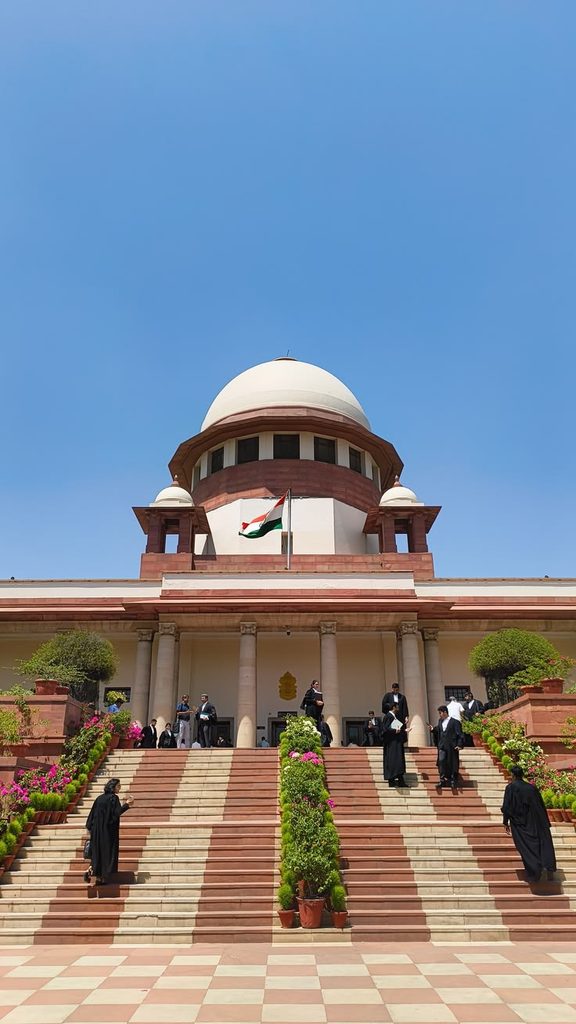
Harish Rana v. Union of India, 2026 INSC 222 (Supreme Court of India, 11 March 2026)
Facts
Harish Rana took a fall back in 2013. And from that day forward, he stayed trapped in a permanent vegetative state with no path out. They kept him going through a percutaneous endoscopic gastrostomy tube. The setup delivered all his clinically assisted nutrition and hydration. CANH is what the specialists labelled the process. They asked the courts to let them withdraw that treatment. The Delhi High Court pushed back and declined.
Issue
The matter thus presented a narrow but consequential question: whether CANH could be characterised as withdrawable “medical treatment” under Article 21 and the framework laid down in Common Cause v. Union of India, even where the patient was not dependent on a ventilator and had left no advance directive.
Conclusion/Held
Pardiwala and Viswanathan allowed the withdrawal of clinically assisted nutrition and hydration after all. They called it medical treatment. Then directed palliative care at AIIMS.
Brief Analysis
By permitting withdrawal in Rana’s case, the Court converted a 2018 constitutional principle into workable clinical practice. They made clear the real question has nothing to do with one machine or another.
Hamsaanandini Nanduri v. Union of India, 2026 INSC 246 (Supreme Court of India, 17 March 2026)
Facts
In Hamsaanandini Nanduri v. Union of India, an adoptive mother invoked the Court’s writ jurisdiction under Article 32 against Section 60(4) of the Code on Social Security, 2020. That provision continued the earlier position under Section 5(4) of the Maternity Benefit Act, 1961, under which an adoptive mother was entitled to twelve weeks’ maternity benefit only if the adopted child was below three months of age.
Issue
The issue was whether the three-month age limit was against Articles 14 and 21 of the Constitution.
Conclusion/Held
The Court, with Pardiwala and Mahadevan JJ. ruling together, said that the three-month age limit was against Articles 14 and 21 of the Constitution. Because of this, the Court changed the meaning of Section 60(4). The interpretation now allows all adoptive mothers to receive twelve weeks of benefit starting from the day the child is handed over not from the child’s age.
Brief Analysis
The classification therefore fails the requirement of a nexus between means and end. Rather than remitting the matter to Parliament, the Court read down the provision to give immediate relief.
Shabir Ahmed Shah v. National Investigation Agency, SLP (Crl.) No. 13399/2025, order dated 12 March 2026, reported as 2026 LiveLaw (SC) 305
Facts
Shabir Ahmed Shah, who is seventy-four years old was accused in an NIA case related to alleged terrorism funding under the UAPA. He was taken into custody in June 2019. Out of 248 witnesses mentioned by the prosecution only 34 had been questioned.
Issue
The issue was whether being in jail for a time and the possibility of a slow trial was enough to get bail under Article 21 even though the UAPA has strict rules, about bail in Section 43D(5).
Conclusion/Held
A bench of Vikram Nath and Sandeep Mehta, JJ., allowed the appeal and granted bail subject to stringent conditions. The Court did not hold that the allegations were false or that the UAPA was unconstitutional. Rather, it held that the gravity of the charge cannot, by itself, justify indefinite detention before conviction.
Brief Analysis
But that provision cannot be read as authorising perpetual imprisonment before trial. Article 21 guarantees life and personal liberty, and the right to a speedy trial is part of that guarantee.
THIS CASE SUMMARY IS WRITTEN BY NIMISHA JHA FROM UNIVERSITY OF PETROLEUM AND ENERGY STUDIES